A 3 mm Receiver for the GBT


Text Box:


Internal Proposal for NRAO Research Equipment Funds

March 6, 2000


Prepared by the GBT 3 mm Receiver Working Group


Green Bank:                            Charlottesville:           Tucson:                       External:

P. Jewell (chair)                        J. Condon                    J. Mangum                   R. Barvainis

R. Maddalena                           B. Turner                      J. Payne                       E. Lada

M. McKinnon                          J. Webber

R. Norrod                                A. Wootten

M. Stennes

G. Sandell


Contents


iii         Executive Summary

1.         Introduction

2.         Science at 3 mm with the GBT

3.         Long-term Development Strategy of 3 mm Instrumentation

Family of instruments

68-95 GHz

90-116 GHz

Focal Plane Array

Bolometer Arrays

4.         The 68-116 GHz, Dual-Beam, Dual-Polarization Receiver

5.         Ancillary System Requirements

Tertiary Chopper

IF transmission

Backends

            Observing modes

6.         Antenna Performance and Site Quality Issues

Surface Accuracy

Pointing

Atmospheric Transmission

Atmospheric Stability

7.         Project Budget

8.         Project Staffing and Management

9.         Project Timeline


Executive Summary


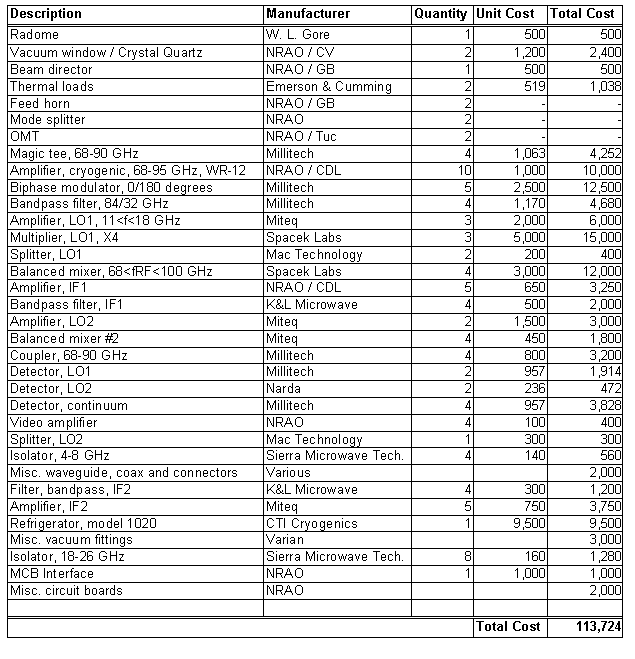
We propose to build a 3 mm dual-beam, dual-polarization receiver for the GBT.  This will be the first of a family of instruments that will exploit the scientific potential of the GBT in its high frequency range.  This first instrument will be built in two modules, and is configured to achieve optimum point-source sensitivity.  The first module will cover the 68-95 GHz band, and will be a pseudo-correlation receiver similar to those built for the MAP project.  This module will have excellent performance for both continuum and spectral line observations.  The second module will be a somewhat simpler total power receiver, and will target spectral line observations in the 90-116 GHz range.  Module 1 will be built and installed for use first.  Module 2 will be installed in the same cryostat at a later date.  The cost of Module 1 is estimated at $118k, including telescope infrastructure.  The additional cost of Module 2 is $75k.   We propose this project for internal NRAO Research Equipment funding.  Module 1 can be built and installed in about 22 months. The Module 2 upgrade will follow ~8 months later.


This proposal describes the conclusions of a working group formed to recommend 3 mm instrumentation for the GBT.  The scientific justification, a complete description of the initial instrument, budget, staffing, and project plan estimates are included.


1           Introduction


A fundamental design goal of the Green Bank Telescope is efficient operation in the 3 mm wavelength band.  Much effort has been expended to ensure that the telescope will function well at this wavelength.  The individual surface panels have been specified to have sufficiently accurate small-scale errors, a system of actuators on each panel has been developed for adjusting their position on the parabola, and a laser metrology system has been developed to measure their position and to form a real-time, closed loop with the actuators.  The metrology system has also been designed to point the telescope to sufficient accuracy relative to stationary ground monuments.  So far, field tests of these systems appear very promising and there is every reason to believe that the GBT will indeed function well in the 3 mm band.


A 100-m diameter telescope operating with reasonable efficiency in the 3 mm band will give a dramatic, new scientific capability. The GBT will have over 4 times the collecting area of the next largest telescope operating in this band, the Nobeyama 45-m telescope.  As will be described in the following section, the GBT can attack a rich variety of projects in the 3 mm band, and should break new ground in such areas as the study of early galaxies.


Although much effort has been expended in making the antenna work at 3 mm, no receivers have been specified owing to the press of work on other aspects of the GBT project.  To address this need, a working group was formed in 1999 to examine the scientific drivers for GBT observations in the 3 mm band and to propose the first receivers and detectors to meet the scientific requirements.  The working group, which has broad scientific and engineering representation from Green Bank, other NRAO sites, and from the outside community, focused its work on a first receiver, but has also charted a longer-term course for a family of instruments in the 3 mm band.


This proposal is for the first generation, heterodyne receiver for the GBT.  The receiver is a dual-beam, dual-polarization pseudo-correlation or continuous-comparison receiver, following the general design employed in receivers for the Microwave Anisotropy Probe (MAP).   Because the receiver is dual-beam, dual-polarization, it will have optimum point source sensitivity to complement the biggest asset of the GBT -- its enormous collecting area.  The pseudo-correlation design will give it excellent continuum sensitivity.  The receiver system can also be operated in a total power mode for spectral line work.  We believe that this receiver strikes the proper balance between ambition and practicality, and will be an excellent first receiver for the GBT in the 3 mm band.


In the sections that follow, we first examine the scientific drivers, discuss the family of instruments that will be needed to exploit the potential of the GBT at 3 mm, focus on the first instrument to be built, and also discuss several other areas important for successful operation of the GBT at high frequencies.  The proposal contains budget and staffing estimates, and a project plan for construction.  We believe that the project could be initiated in mid-2000 and request NRAO Research Equipment Funds for this purpose in CY200


2          2 Science at 3mm with the GBT


2.1       Introduction


The working group has considered both continuum and spectral line  observations and has discussed where the GBT is expected to have the

largest impact. Our conclusion is that we consider both continuum and

spectral line to be equally important. We realize that we cannot build

a receiver that would satisfy all our demands. Spectral-line work

requires a receiver optimized for broad bandwidth, low noise, and good

point source sensitivity. For competitive or unique continuum work we

need an array receiver, preferably something similar to BOLOCAM, that

is now being built for the LMT. Initial calculations show that the

sensitivity of a bolometer is comparable to that of a heterodyne

receiver. For a heterodyne receiver the bandwidth is ultimately limited

by 1/f-noise.  Sky noise is much more of a limiting factor for

continuum sensitivity than for spectral line. Although one can

effectively reduce sky noise by using switching schemes, cancellation

is not complete, because of spatial variations over the field of view.

Since sky variations are believed to occur at low altitudes, they are

therefore generally less severe for a large telescope, because they

occur in the near field of the dish. A large telescope like the GBT

will therefore see almost the same part of the sky both in the on and

in the off position. However, an array can take advantage of the the

fact that the noise is correlated over the array and it can therefore

be removed.  Sky noise is not considered to be a problem for a

heterodyne system in spectroscopic mode.

The working group expressed some worries about the error beam response

and how it may affect the quality of the data. Another major concern

was the pointing accuracy. With a HPBW of 7 to 8 arcsecs, one

needs sub-arcsec pointing. Most of the science discussed below should

be possible in benign night time conditions, if we can achieve an rms

pointing of approximately 2 arcsecs.

Below we briefly summarize different areas of observational astronomy,

and highlight topics where we think the GBT will excel. We discuss

spectroscopy and continuum observations separately. Even though we omit

many areas where the GBT can make a contribution, the summary below shows

that the GBT will do unique science in almost every area of observational

astronomy in the 3mm band.

A ``Top-10'' list of unique GBT 3mm science could look like this:

·        Detection and studies of CO and its isotopes or CI in extremely high redshifted galaxies


·        Continuum observations of extreme high redshift galaxies

·

·        The universe at moderate redshifts - finding molecular line absorption in quasar absorbers

·

·        Vega type stars in continuum - do they have large grains? How many stars can we detect?

·

·        Protostars and prestellar cores - can we see infall in a protostellar embryo?

·

·        Molecules in comets

·

·        The low density ISM - molecular line absoption studies

·

·        Continuum observations of T Tauri stars. Fluffy or very large grains – building blocks for planets?

·

·        The chemistry of cold protostellar objects - depletion and time dependent chemistry

·

·        Pluto and Charon - do we understand their surface properties?

·

2.2 Heterodyne Observations


2.2.1 The Solar System

Comets are an obvious target for the GBT, since it has an unbeatable

point source sensitivity that will allow us to reach comets farther

away from the Sun than what is currently possible.  We can more easily

find out at what stage ices start to evaporate and produce detectable

amounts of molecules like HCN, HNC, HCO+ and CO. The GBT can also

detect fainter comets, which may not produce large enough halos to be

detectable with current cm- and mm-wave telescopes.

2.2.2 The Interstellar Medium

Studies of dark and molecular clouds generally require mapping. Even

though the GBT will do a better job than any other single dish

telescope and go fainter than any of the current mm-arrays, we feel

that it is initially more profitable to concentrate on studies which

require little or no mapping and where the GBT can make better use of

its small beam size and high point-source sensitivity. What this

implies is that we will first concentrate on topics where the high

angular resolution is important, or where we absolutely need the

sensitivity that only the GBT can offer.

Diffuse and translucent clouds are very useful for tests of

astrochemical models, and even though they are several arcminutes in size,

they often show structure and variations in chemistry on smaller

scales.

Studies of star forming clouds also require mapping, because star

formation is almost always related to outflow activity, in some cases

cover tens of arcminutes on the sky or more. Infall, often more

localized, may occur on spatial scales that are larger than the GBT

beam. However, as we will show below, the GBT is extremely well suited

for studying many aspects of star formation.

Studies of photon dominated regions (ionization fronts) or interstellar

shock fronts is another area which often requires mapping, but which is

an important testbed for interstellar chemistry and how the chemistry is

affected by the type of shock that we see. Shock fronts are often

very localized and compact, and therefore well matched to the GBT beam.

What makes the GBT attractive for studies of astrochemistry is that we will

have high sensitivity, large frequency coverage and excellent velocity

resolution due to the GBT spectrometer. Spectral line

surveys will be much faster and deeper than with any other mm-telescope on

everything from translucent clouds to hot cores, with a beam which is

well matched to the size of the regions we want to study.

2.2.2.1 Absorption line studies

Absorption line studies will really benefit from the point source sensitivity

of the GBT through absorption line studies. We will be able to observe much

fainter extraglactic sources and still have a strong enough continuum

to see molecular line-absorption. The GBT will also increase the

number of ultra-compact HII-regions where we can study gas in

absorption against the free-free continuum. For these, the narrow beam will

minimize emission from the extended molecular cloud.  Absorption line

studies are especially useful for accurate column density estimates of

subthermally excited lines, which may not be seen at all without the

aid of a continuum source. The same principle applies if we want to

understand the chemistry derived from UV or optical/IR absorption

studies.

2.2.2.2 Hot Cores and UC HII-Regions

The GBT is ideal for studies of chemistry of high mass star forming regions

and hot cores, which are generally very compact and have the richest

molecular chemistry of any regions we know of. The GBT has a beam

that is well matched to the size of a hot core region, which is

typically a few to about 10 arcsec. The high angular resolution will

limit the contribution from the surrounding molecular cloud, allowing

more accurate determination of properties of the molecular material

associated with the dense cores.

2.2.2.3 Low Mass Stars and Accretion Disks

The study of low mass stars and accretion disks is another area where

we expect that the GBT will play a major role.  Young stellar objects

are cold and compact but still have a relatively rich molecular

chemistry. Even in nearby dark clouds, protostars will either appear

unresolved to the GBT or, at most, be extended on the 10\arcsec\ level.

That is , they provide an almost perfect match to the GBT beam. The

study of the astrochemistry of protostars is just in its infancy, but

it is clear that protostellar chemistry appears to be time dependent

and may provide a means to determine the age or evolutionary state of a

young stellar object. Many molecules appear to be depleted in cold,

protostellar disks while others may be enhanced by several orders of

magnitude. Current mm-array telescopes do not have the sensitivity to

detect the cooler, extended envelopes and disk surrounding these young

objects. We therefore need single-dish observations that can probe the

coldest regions of these protostellar disks and envelopes. In extreme

cases these may be visible only by the ground state transitions of low

excitation molecules in the 3 mm band. The GBT also complements

single-dish observations in the sub-mm regime because mm-arrays tend

only to probe the innermost parts of the circumstellar disks and

envelopes surrounding these stars, while single-dish sub-mm wave

telescopes, whose beam sizes are well matched to the GBT beam generally

see the cooler extended envelopes. The 65 - 115 GHz window covers

most of the ground state transitions of light interstellar molecules

and their isotopomers.  Since deuterated molecules are found in the

lower part of the band, it is essential that the GBT 3mm

heterodyne receiver should cover the whole accessible band observable

from the ground.

2.2.2.4 Infall and Accretion

Studies of infall in protostars is one of today's hot topics, and the

results are still rather controversial. A spectral signature of infall

motion, infall asymmetry, can be observed if the foreground infalling

gas has a lower excitation temperature than the gas closer to the star,

and if the foreground gas has a sufficient optical depth.  Most

protostellar objects show this characteristic infall signature.

However, in other stars believed to be equally young, or the same

object observed in another optically thick molecule, the infall

signature may be reversed. These studies are further complicated by the

fact that many young stars are expected to be surrounded by rotating

disks and to drive outflows. It is not always possible to separate

infall from outflow or rotation, especially if the inclination of the

protostellar disk is unknown. Infall studies of low mass protostars

require extremely high velocity resolution, about 0.04 km/s, a

condition which is easily met by the GBT spectrometer.

The narrow beam and high sensitivity of the GBT should enable us to

test disk models and place more critical tests on infall models. Infall

models predict that the infall velocity should speed up close to the

protostellar core. Since this is the region where outflow activity also

occurs, this has not yet been observationally confirmed because near

the protostar it is impossible to discriminate between infall, outflow

and rotation. A few prestellar cores have been found to show evidence

for infall, but these are far less secure than infall in low mass

protostars. A telescope like the GBT may be able to find protostellar

embryos in the interior of cold collapsing prestellar cores through the

signature of infalling gas accelerating close to the accretion core.

The mass in such pre-protostellar infalls is expected to be very small

and well below the detection limit of current mm-arrays.

2.2.3 Late Type Stars

The majority of AGB stars are rather distant and often detectable only

by their strong FIR and maser emission (OH, SiO etc).  A few hundred

stars have been detected in CO or HCN, but only the most extreme or

nearby stars have been studied in detail. The GBT will be able to

better detect more distant stars with more tenuous molecular envelopes

than we can in the sub-mm or with aperture synthesis telescopes, which

are severely flux limited. We can also study less abundant molecules in

the stellar envelopes and therefore better understand the late stages

of stellar evolution.

2.2.4 Molecular Masers

The 3 mm window has SiO, CH3OH, HCN masering transitions, and

hydrogen recombination-line masers, the latter so far only seen in a

single object.  SiO masers are widespread in late type stars, and the

masing methanol transitions (Class I) are widespread in HII regions and

regions with high mass star formation. Since all masers are point

sources or very compact, they are easy targets with a high gain

telescope like the GBT.

2.2.5 Extragalactic Astronomy

2.2.5.1 Nearby Galaxies

Most nearby galaxies have been mapped in CO J=1-0 with interferometers,

and one would think that there is no need to re-observe them with the

GBT. However, existing arrays are sensitivity limited while the GBT can

go much deeper. Even after ALMA is completed, the sensitivity of the

GBT to large scale structure will be very complementary.  With the GBT

we have the angular resolution and sensitivity to target individual HII

regions and Giant Molecular clouds in nearby galaxies.

2.2.5.2 Nearby Clusters

Although work is already ongoing to study and characterize the

molecular content in nearby clusters like Virgo and Ursa Major, the

current studies are severely flux limited. One needs to extend the

sample to fainter galaxies.  This is where a telescope like the GBT is

essential.  Until ALMA or the LMT goes on line, the GBT is the only

telescope that can reach faint galaxies. For work like this we need a

receiver with excellent point source sensitivity and no mapping is

required.

2.2.5.3 Ultraluminous Galaxies, Starbursts, Mergers and Interacting Galaxies

IRAS-selected samples of ultraluminous, compact galaxies are well

suited for studies with the GBT. Optically selected samples of

interacting galaxies and mergers often have angular sizes of the order

of one arcminute or more. However, since the galactic nuclei in a

merger will have a much smaller separation, one needs high spatial

resolution to separate the emission from the individual galaxies.

2.2.5.4 Extragalactic Masers

Some masers, particularly OH and H2O, have been detected in nearby

galaxies. In one case, NGC 4258, studies of the proper motion of the H2O maser spots provide an accurate distance to the galaxy and hence a measure of the Hubble constant. Even though H2O masers are the strongest interstellar masers known, it is entirely possible that one could also find Class I methanol ``megamasers'' in galactic nuclei, which, therefore, could provide yet

an alternative yardstick to the distance scale.

2.2.5.5 Quasar absorbers

For redshifts z approximately 0 to 1, Mg II absorbers provide a sample of gas--rich galaxies, yet very few (three?) such galaxies have been detected to date at

mm--wavelengths. Absorption line studies are much more sensitive to

small columns of gas and therefore relatively low abundance molecules

(HCO+, HCN, HNC, and NH2+. The GBT, with its vast improvement in

sensitivity should be able to unravel more molecular rich systems far

more successfully than any other telescope.


The first galaxy to be detected in  CO line emission with a redshift z

greater than 2 was IRAS F10214+4724 with a redshift z=2.24. Since then only

about 15 high z sources have confirmed detections in the radio or

sub-mm. Most of these have been detected with large single-dish

telescopes like Nobeyama or the IRAM 30m or with arrays like BIMA or

PdB. The highest red-shift detected so far is BR12102 at a redshift of

4.7. This is clearly an area where the GBT can be expected to play a

major role. In a system like the Cloverleaf, the GBT will obtain a

5-s detection of the CO J=3-2 line (redshifted to 97.2 GHz) in

less than 2 minutes. If we assume that the not yet detected 13CO

line is 5 - 10 times fainter, then we would detect it in less than 2

hours. Since high-z galaxies in many respects appear similar to

starbursts, the isotope ratio could be high (most starbursts have

[12CO/13CO]  approximately 10 - 20), but we could still easily detect

13CO in this galaxy.  The GBT will therefore be able to detect

isotopomers and  molecules other than CO (like HCN or HCO+) in already

detected systems.  Also, the GBT should be a formidable search machine

in finding molecular gas in high-z sources.

Work on high-z galaxies requires an instantaneous bandwidth greater than 1.5 GHz, which should be easily achievable.  The maximum bandwidth of

the GBT correlator is 800 MHz, corresponding to a velocity coverage of

2600 km/s at 90 GHz.  This is more than adequate for any

extragalactic source with known redshift. However, most high-z galaxies

have poorly known redshifts, and we will want to use the maximum

bandwidth we can get to search for lines. In its low resolution mode,

the GBT spectrometer can be split into 8 X 800 MHz bands, almost

doubling (minus some overlap) the search window if we split the IF from

each polarization into two 800 MHz bands.

Table 1 shows that at least one or more CO transition will fall

within the 3mm band except for galaxies with redshifts in the range

z=0.73 - 0.96, which will have to be studied in other molecular

transitions. For redshifts of three or higher, there will be more than

one redshifted CO transition in the band, therefore enabling an

accurate determination of the redshift. The ground state neutral carbon

(CI) fine structure lines probe the high redshift universe in the

z-range 3.2 - 11.1.


Table 1

Observable z-range with the GBT 3mm Receiver


Molecule

Transition

z-range

12CO

J=1-0

0.00-0.73

13CO

J=1-0

0.00-0.66

12CO

J=2-1

0.96-2.47

13CO

J=2-1

0.88-2.31

12CO

J=3-2

1.94-4.20

13CO

J=3-2

1.81-3.97

12CO

J=4-3

2.92-5.92

CI

3P1-3P0

3.19-6.40

CI

3P2-3P1

5.89-11.1

2.3 Continuum Observations

  With a correlation type, dual-horn receiver we estimate a point source

sensitivity of approximately 1.1 mJy/ÖHz while a bolometer array will

have a sensitivity of the order of 0.8 mJy/ÖHz per bolometer element. If we compare this to the 850mm sensitivity of the SCUBA bolometer array on JCMT, we conclude that a bolometer receiver on the GBT will be more sensitive for a source with a frequency dependence of u3, while SCUBA will still be marginally

better for a source proportional to u4. If our proposed correlation receiver can achieve bandwidths of approximately 20 GHz, it will have similar point source sensitivity (1 - 2 mJy/ÖHz) as each bolometer pixel. In one second the GBT

will have sensitivity  equal to any of the present mm-arrays for a full track. With a dual beam system and no beam rotator, we will have to concentrate on compact sources, since mapping extended sources will be very inefficient.


Figure 1:  Dust spectra for 50 K optically thin dust for three different

assumptions of b. All spectra are normalized to an 80 mJy flux

density at 850mm, which is the signal strength that SCUBA will

reach in one second. b = 1 is typical for a T Tauri star, an

extreme Class 0 source (protostar) or late type star. b = 1.5 is

typical for more evolved YSOs, a hot core type object and most

galaxies, while b = 2 is the normal dust emissivity of dark and

molecular clouds. Note that if the dust is significantly optically

thick at 850mm, the emission will be higher at 3mm. We also show

two dust spectra redshifted to a z of 5 and 10, respectively. The two

dashed horizontal lines around 90 GHz show the expected performance

range of the GBT 3mm continuum receiver (correlation receiver and bolometer system).

2.3.1 Solar System

  Comets are an obvious and important target for the GBT and with the

correlation receiver they should be easily detectable.  Asteroids will

be easy targets as well as the major moons around Jupiter and Saturn.

Pluto, undetected in the radio regime until a few years ago, should be

easily detected with the GBT (S £ 2.5 mJy at 3mm). Such

observations will provide important constraints on the surface

properties of the planet, i.e. whether the surface of Pluto is

nonisothermal or nongrey.

2.3.2 PMS Stars and Protostellar Sources

   Many young pre-main-sequence stars (T Tauri and Herbig Ae/Be stars)

have been detected in thermal dust emission at 1.3mm or in the sub-mm

regime.  These studies indicate that the dust emission is surprisingly

flat, suggesting that the thermal dust emission is flatter than that

from the dust in the normal interstellar medium. The emission from some

T Tauri stars suggests that the flat spectral energy distribution could

be due to very large dust grains, perhaps the start of a planetary

system. In a few extreme cases it is clear that the dust is still

partly optically thick in the sub-mm, and observations at 3mm will

therefore yield a more accurate mass estimate of the dust.  Only a few

of the brightest T Tauri stars are strong enough to be detected with

existing aperture synthesis telescopes at 3mm, but with the GBT we

can easily reach a much larger sample.

   Even with the sensitivity of the correlation receiver we can easily

detect protostellar candidates. These appear to be more extended than

disks around PMS-stars and are often resolved to  5 – 10 arcsec structures in the sub-mm.  Millimeter array measurements often find unresolved continuum and disk-like molecular line structure in these objects.  The GBT has a spatial resolution similar to that of single-dish sub-mm telescopes, and will therefore provide a compatible data set for modeling of protostellar disks. The same applies to high-mass protostars, but here we have to worry about extended

emission. Observers should utilize maps made at shorter wavelengths to

ensure that an object can be observed with the GBT.  More detailed

studies of protostars, which would involve mapping the morphology and

physical conditions in the cloud cores surrounding them, will have to

wait for the installation of a bolometer array.

2.3.3 Vega-type Stars

  The strongest Vega type stars -- main sequence stars with excess dust

emission -- should be detectable with the GBT correlation receiver. These

observations will provide important constraints on the size of the dust

emitting particles. The few stars that have been studied in detail show that

Vega-type stars are likely to produce planets.

2.3.4 Early-type stars

What we here loosely call early type stars are O and B stars, Wolf-Rayet

stars, and Be stars. The emission from these stars is classically

interpreted as originating from an isothermal, uniformly expanding

stellar wind. However, apart from a few exceptions, there are very few

observations of these stars in the mm-part of the spectrum. Such

observations are important, because the spectral index will immediately

tell us whether the standard model is valid or not. A shallower

spectral index would indicate a more collimated wind, while a steeper

index would be an indication of additional emission processes, e.g.

dust emission or non-thermal emission mechanisms.  The GBT will easily

detect many more stars in this category than what has been previously

possible, hence allowing a much more systematic study of the emission

processes in these objects.

2.3.5 Nearby giants and supergiants

The sensitivity of the GBT will allow us to easily detect the stellar

photosphere of nearby giant and supergiant stars. Recent observations

of a few supergiants indicate that the radio disk of these stars

appears to be about twice as large as the optically visible

photosphere. The sensitivity of the GBT will allow us to observe a much

larger sample, and hence immediately tell us whether this is

universally true or whether other emission mechanisms also play a role

at mm-wavelengths.

2.3.6 Symbiotics and Novae

Almost all cool (D-type) symbiotics are detected at mm-wavelengths, and

mm-emission has also been seen in nearby S-type symbiotics. The

mm-emission in S-type symbiotics is believed to be optically thin

free-free emission, but there are still rather large discrepancies

between cm and mm-emission in several objects. This could be due to

variable mass loss or additional contribution from dust. Observations

at 3mm are ideal, since the dust emission is expected to be much

weaker and the free-free emission should dominate. The sensitivity of

the GBT will significantly increase the number of stars that can be

detected at high frequencies and willl therefore lead to a much better

understanding of the physics of these stars. Other novae have been observed at mm- or sub-mm wavlengths, but are too

 faint to be detected with current arrays at 3mm. With the GBT they

 should be easily detected, and hence fill in a crucial gap in the

 spectrum needed to properly model and understand the physics of these

 stars.

2.3.7 AGB-stars and protoplanetaries

AGB-stars are surrounded by dust shells and seen at 3mm due to

thermal emission from dust. With the GBT we should easily detect a

large number of long-period variables, Mira stars and all known

protoplanetaries visible from Green Bank. By combining GBT data with

IRAS and sub-mm observations we can directly measure the dust

emissivity and mass loss in these stars.

2.3.8 UCHII Regions and Molecular Clouds

   Most HII regions and molecular clouds are quite extended and

therefore difficult to study with the GBT dual beam system. They are

often very bright and therefore better observed with mm-arrays, but one

would also need high resolution single dish observations, because

arrays effectively filter out extended emission. Most of this work will

likely have to wait until we get a bolometer array.

2.3.9 Extragalactic Continuum

2.3.9.1 Nearby Galaxies

Nearby galaxies may show thermal dust, thermal free-free, and

nonthermal emission. Most of the dust emission is concentrated in

galactic nuclei. If we use maps from sub-mm observations, mm-arrays and

VLA observations at cm wavelengths, the GBT could be used to discriminate between dust and non-thermal emission. The GBT can also be used to measure luminous HII complexes in nearby galaxies, which are too faint to be detectable with the current generation of mm-arrays.

2.3.9.2 AGNs and Blazars

AGNs and Blazars are easy targets for the GBT dual beam system; a subset of

strong blazars will be used as pointing sources for GBT. Most blazars

are variable with flux densities varying by a factor of a few on timescales of months. The variability of blazars, especially when combined with VLBI observations, provides important constraints on blazar models and we expect that the GBT will take an active role in this work.

2.3.9.3 Ultraluminous Galaxies, Starbursts and Mergers

All starburst galaxies are associated with strong, thermal dust emission, although only the brightest ones are strong enough to be detected with current mm-array telescopes. The GBT will easily reach fainter galaxies and therefore provide important constraints on the dust emission.

2.3.9.4 High-z Galaxies

High-z galaxies are point sources and can be relatively strong in the continuum.  The GBT dual-beam continuum receiver should be able to detect all the high-z sources observed in CO.  Observations are likely to confirm suspected candidate high-z galaxies, because all known systems are very dust-rich and therefore emit in the thermal continuum. Because the GBT can go deeper than any current 3mm system, we will find new high redshift galaxies and place better constraints on the spectral energy distribution of known high-z sources. Figure 1 shows that for high-z galaxies the peak of their dust emission is shifted into the

mm-part of the spectrum.

2.4 Scientific Requirements on the Receiver Design

In the two previous sections we have briefly reviewed some of the observational projects that we expect to be carried out with a 3mm system on the GBT. These programs define some minimum requirements on the receiver design, which we summarize below:

·        Both line and continuum observations require a tertiary beamswitch, which should be capable of beam switching with a rate of at least 3 Hz, and preferably 10 Hz,  to cancel sky variations as efficiently as possible.


·        The receivers should be single sideband for easy, accurate calibration. The calibration can be done with a chopper wheel, although a three load system is preferred, i.e. cold, ambient, sky.


·        The spectral line receiver should support total power, frequency-switched and beam-switched observations. The latter ensures good baseline stability for observations of faint broad lines from external galaxies. For most galaxies an instantaneous bandwidth of 800 MHz is sufficient (e.g. ultraluminous starbursts and high-z galaxies may have line widths of more than 1000 km/s). To search for high redshift galaxies we want the broadest bandwidth that can be handled by the GBT IF-system and GBT correlator, approximately 1500 MHz. For galactic astronomy, especially projects like spectral line surveys, we need an IF system that can selectively pick up the maximum bandwidths that the optical fibers can handle, i.e. 2 X 8 GHz, not necessarily contiguous. One may, for example, simultaneously observe all transitions of a heavy molecule and therefore get reliable intensity ratios.  Additionally one could keep a band at for example the SiO v=1 J=2-1 transition, and use SiO masers for pointing.  For optimum continuum sensitivity we want as broad a bandwidth as is technically feasible.


·        The receivers need to be phaselocked, have good frequency and a phase stability appropriate for mm-VLBI. However, mm-VLBI requirements should not dictate the choice of IF frequency. Some observational programs, such as infall studies in low mass protostars, require a velocity resolution of a few hundredths of a km/s, corresponding to about 6 kHz at 90 GHz.


·        The first 3 mm receiver should cover an approximate frequency range from 66.5 GHz to 95 GHz, or at least to the standard waveguide cutoff at 92 GHz. It should be automatically tunable with a reasonable gain response over the whole band.

·


Polarization requirements were not explicitly discussed by the working group. It should be noted that Zeeman splitting studies can be done using molecules such as CN. Observations using the cross-correlation capability of the GBT spectrometer may be particularly useful.


3           Long-term Development Strategy for 3 mm Instrumentation


3.1         Types of Instruments Needed


As evidenced by the last section, the 3 mm window is exceedingly rich in scientific potential.  A wide variety of astrophysical projects can be addressed in this window, involving several different emission mechanisms – dust, synchrotron, and free-free continuum, thermal and maser molecular line emission.  Many important sources will be point-like in the GBT beam, whereas many other targets will be quite extended.  It is very unlikely that any one instrument will be ideal for all projects.   In the broadest terms, there are two classes of instruments required:


·        Systems with optimum point-source sensitivity (to both spectral line and continuum emission).

·        Focal plane arrays (cameras) for images on intermediate-to-large angular scales (continuum and spectral line)


Owing to its enormous collecting area, the GBT’s single most important asset is its point-source sensitivity.  Important areas of research such as the study of high-redshift galaxies will depend critically upon this.  An instrument optimized to exploit this asset is a priority.  The observing technique used for point source observations is usually beam-switching, and the optimum sensitivity is achieved with a dual-beam (double-Dicke) system that allows the source to be observed in both beam positions.  There are important point-source observations to be done in both the spectral line and continuum areas, and the optimum technology for these two is not necessarily the same.


3.2         An Instrument for Point Source Work


High-resolution spectroscopic work requires a heterodyne receiver.  The two technological options are SIS and HFET receivers.  The lowest noise temperatures in the 3 mm band are still achieved by SIS receivers (TRx<50 K SSB is possible).  However, SIS receivers require 4 K cryogenics.  This is an operational complication.  In years past 4 K maser receivers were in use in Green Bank, but no such systems are currently in operation.  HFET receivers are now producing very good results in the 3 mm band (60 – 100 K SSB).  They require only 15 K cryogenics, which can be achieved with comparatively simple closed-cycle refrigeration systems.  The Working Group felt that the operational simplicity of the HFET devices outweighed the advantage in noise temperature of the SIS systems.  HFET systems are thus the choice for the 3 mm spectroscopic receivers.


For continuum work in the 3 mm band and at shorter wavelengths, the best sensitivities may be achieved with modern bolometer systems.  The latest generation of bolometers should have noise equivalent flux densities (NEFDs) of less than 1 mJy/Hz1/2 when used on the GBT.  This sensitivity is extremely enticing, and for large-scale focal plane arrays, bolometers are the technology of choice as will be discussed below.  Bolometers also have demanding cryogenic requirements and are an unfamiliar technology in Green Bank.  Wideband HFET heterodyne systems are an alternative.  Unfortunately, HFET amplifiers suffer from significant 1/f noise that increases in importance relative to shot noise as bandwidth increases.  Thus, the signal-to-noise improvement that ordinarily comes with increasing bandwidth is not achieved when the devices are operated in total power mode, rendering them undesirable as broadband continuum detectors.  The 1/f noise can be overcome by very fast switching and correlation techniques.  This has been demonstrated by the Microwave Anisotropy Probe (MAP) pseudo-correlation (aka continuous comparison) design (cf. Spergel, Hinshaw & Bennett 1999; Predmore et al. 1985).  The HFET devices for MAP were built at the Central Development Laboratory.  With a bandwidth of 7 GHz, an HFET system will have continuum sensitivities within a factor of 2-3 of a bolometer system.  Since such a system can also serve as the spectroscopic receiver and is more familiar technology for NRAO and Green Bank, the Working Group felt that a MAP-type, dual-beam, dual-polarization receiver would be an excellent first system for GBT 3 mm point source observing.


The 3 mm spectral window is bounded by atmospheric O2 lines below 68 GHz and above 116 GHz.  Best transmission is between 80 and 100 GHz.  It is not possible to cover the entire 68-116 GHz band with a single feed and waveguide set.  Using standard WR-12 and WR-10 waveguide, the band is typically split into lower and upper ranges, covering ~68-90 GHz and ~90-116 GHz, respectively.  This requires two independent sets of microwave electronics chains.  The pseudo-correlation (MAP-type) receivers are more complicated with more components required than a conventional, total power receiver.  The pseudo-correlation design is motivated by the need for good continuum performance.  Good continuum performance is needed for only one range of the 3 mm band, however.  This suggests that one of the bands in the 3 mm window could be built as a pseudo-correlation receiver, and the other could be a simpler, total power receiver.  The Working Group concluded that the low band (68-90+ GHz) should be the pseudo-correlation receiver as it will be somewhat easier to begin observations with the GBT in the lower frequency range, and we would like good spectral line and continuum performance in the initial instrument.  The upper range would be a total power receiver, and would follow in a second phase.  If possible, the group would like the modules for both frequency ranges to be incorporated into a single cryostat.


3.3         Continuum Camera


As described in Section 2, there are many projects that could benefit from a rapid continuum imaging system.  The GBT can accommodate a very sizable focal plane array system.  Norrod and Srikanth (GBT Memo 199, 1999) have calculated the off-axis aberrations at the Gregorian Focus along a radial cut from the field center toward the dish for a frequency of 90 GHz.  The calculations showed that the highest coma sidelobe was below –20dB out to a radius of ~2.9 arcminutes, and was below –15 dB out to a radius of ~6 arcminutes.  If we assume that the aberration levels are the same in other directions off axis, the effective field of view of the GBT at 90 GHz is between 6 and 12 arcminutes in diameter (Figure 1).  Given a diffraction beam of ~7 arcseconds, up to thousands of beams can be placed in the focal plane, if they can be packed closely.  Such cameras now seem feasible.


Bolometer camera advancements have been among the most exciting developments in millimeter-wave astronomy in recent years.  The SCUBA array on the JCMT, with 131 total pixels, has revolutionized submillimeter continuum observing.  For the first time, observers can quickly and sensitively image large areas of the sky for submm continuum.  A new array, BOLOCAM, is nearing completion and will be used in the 1.3 mm band on the CSO and LMT.  BOLOCAM has 144 pixels.  Bolometer camera technology is exploding.  The next generation of cameras may have >10,000 pixels and are becoming the equivalent of CCD cameras for the millimeter waves.


This is a very exciting capability and the GBT should acquire it.  There seems little doubt that a sensitive, large format camera on the GBT could deliver ground-breaking science in the 3 mm continuum.  The Working Group felt that GBT management should pursue a BOLOCAM collaboration, or something like it, in the near term as it could be available quickly.  A next-generation, super-large array would also be pursued and is being investigated at present.  Proposals for these instruments will be developed separately.


We must emphasize that an advanced bolometer array with thousands of pixels is a long-term (5+ year) project and will be costly.  There is strong motivation to begin this project soon, but we also need less complex instruments in the short term for initial science and for antenna performance evaluations.  Such an instrument is described in Section 4.


3.4         Spectral Line Focal Plane Array


Many projects studying Galactic sources and nearby external galaxies will benefit from a focal plane array designed primarily for spectral line observations.  Technology does not yet allow vast arrays of heterodyne pixels as is now possible for the bolometer arrays, but this can be offset in both data and information content by the spectral dimension. 


A good model for a spectral line focal plane array for the GBT is the SEQUOIA instrument designed at UMASS by Erickson, which uses Weinreb’s MMIC HFETs.   The instrument has 16 pixels, to be expanded to 32.  It covers 85 to 115 GHz and has noise temperatures in the 60-70 K range, with relatively good performance uniformity among the RF channels.   It has a very compact design that should be easy to install on the GBT. 


The GBT IF transmission system can currently accommodate 8 IFs of 7 GHz bandwidth each.  The GBT Spectrometer has modes of 32 inputs at 50 MHz bandwidth each, and also an 8 x 800 MHz mode, although only 16 IF down-converters have been built in the initial system.  The 32 narrow band IFs could, in principle, be multiplexed onto the 8 IF fibers, although additional electronics will be required.  At 90 GHz, 50 MHz bandwidth corresponds to 166 km/s velocity bandwidth.  This is easily wide enough to accommodate most Galactic sources (for observations of a single line).  Extragalactic sources will usually require wider bandwidths.  The 800 MHz bandwidth corresponds to 2665 km/s. 


3.5       Recommended 3 mm Development Program


The Working Group recommends that the following instruments be built.  We recommend that the instruments be built in the listed sequence, although future circumstances or technological advances could well modify these.


1.      68-116 GHz, dual-beam, dual-polarization HFET receiver.  Build in two modules, to be incorporated into the same cryostat if possible.


            Module 1:        68-95 GHz pseudo-correlation receiver.  Should be built first.

Module 2:        90-116 GHz total power receiver.  Follow on immediately upon completion of Module 1.


2.    Bolometer Camera 1.  This would be a modest camera using existing technology, and might be a collaboration or follow-on to the BOLOCAM instrument.  This instrument should have a relatively short development time, and would be built by an outside group.  The NRAO would have responsibility for interfaces, mounts and infrastructure, and external optics.


Items 3 and 4 should proceed in parallel, if possible.


3.    Next-Generation Bolometer Camera.  This would be an advanced design of several thousand pixels, using transition-edge superconductors and SQUID readouts or other advanced technology.


4.    Spectroscopic Focal Plane Array.  This would be an instrument of ~32 pixels for the 85-115 GHz range.  The SEQUOIA instrument is a possible model for this instrument.


The remainder of this document addresses only Instrument 1, the 68-116 GHz receiver.  Future documents will discuss the other instruments.


References


Predmore, C. R., Erickson, N. R., Huguenin, G. R., Goldsmith, P. F., 1985, “A Continuous Comparison Radiometer at 97 GHz,”  IEEE Trans. MTT, MTT-33, 44.


Spergel, D. N., Hinshaw, G., Bennett, C. L.  1999, “MAP Radiometers,” http://map.gsfc.nasa.gov/html/radiometers.html;


4           The 68-116 GHz, Dual-Beam, Dual-Polarization Receiver


The proposed GBT 3 mm receiver will ultimately cover 68 - 116 GHz.  It will be comprised of two modules, occupying the same dewar, each covering roughly half of the 68 - 116 GHz band with some overlap.  Based on scientific goals, it has been decided that the lower band shall be a pseudo-correlation receiver, and the upper band shall use a simpler total power receiver.


4.1       Proposed GBT 3mm Receiver


4.1.1    Module 1 Summary


Frequency Range: 68-90 GHz; Goal 68-100 GHz.


Configuration:

Two beams; each dual-linear polarization. Pseudo-correlation radiometer for continuum, with dual-conversion coherent channels for spectrometry and VLBI.  Low Noise Amplifiers:  probably 6 stage; Cryogenically cooled to 15 Kelvin with closed-cycle refrigeration.


Beamwidth:

Approximately 8 arcseconds FWHM.


Beam Separation:

Fixed.  24 arcseconds minimum - may be more.


Feedhorn:

NRAO manufactured, compact corrugated circular feedhorn.


Orthomode Transducer:

NRAO manufactured, symmetric 5-port dual junction type in square waveguide (Waveguide Components for Antenna Feed Systems: Theory and CAD; Uher, Bornemann, and Rosenberg; p396ff.).


Low Noise Amplifiers:

NRAO manufactured, five-stage, indium-phosphide HFET amplifiers.


Continuum Observing:

Pseudo-correlation phase switching rate up to 2.5 kHz with less than 1 microsecond blanking time.  Chopping tertiary rate up to 10 Hz.  Continuum detection bandwidth 7 GHz.


Spectral Line / VLBI Observing:

Single-sideband, dual-downconversion to 4-8 GHz IF.  Phase-locked local oscillators.  Tuning resolution of 4 Hz on the first LO; frequency switching at up to 10 Hz rate with less than 20 millisecond blanking time.  Fixed second LO.


4.1.2    Module 1 Technical Description


A block diagram of the receiver front-end is shown in Figure 2.  The module consists of the electronics needed to support two dual-polarized beams.   The feeds, magic tees, amplifiers, phase shifters, and bandpass filters are cooled to 20 K.


Continuum detection from the output of the pseudo-correlation receiver occurs at the sky frequency, with more than 20 GHz bandwidth.  The detectors and associated DC coupled amplifiers are tightly integrated into the frontend and designed for good temperature stability.  Digitization of the amplified analog detector voltage for this receiver will require investigation during the project.  Current GBT continuum detection for other receivers is accomplished by driving a 10 MHz V/F converter with the detector voltage.  The V/F output is then transmitted to the Digital Continuum Receiver backend in the GBT Equipment Room.  The DCR, built on a VME backplane, incorporates counters to integrate the V/F data stream in various synchronous detection or total power modes.  However, this scheme has insufficient dynamic range under the combination of fast switching rates and broad detected bandwidths planned in the 3mm Receiver.  Either a similar scheme using faster V/F converters (50-100 MHz), or a fast-sampled A/D converter scheme will be necessary for phase-switched continuum observations with this front-end.


For spectrometry and VLBI, as well as for continuum observations, good gain balance is required between the 180-degree hybrids.  For non-continuum observations, the phase switches will be locked in one state.  With perfect gain balance under this condition, each output of the second hybrid produces one feed polarization.  In practice however, each output contains also a Adifference@ output signal (Beam 1 - Beam 2) at a level proportional to the magnitude of gain imbalance


4.1.3    IF Transmission


Broadband continuum detectors will be located on the receiver front end.  The detected voltage will be digitized and transmitted via optical fiber to the GBT Equipment room.


For spectrometry, VLBI, and other applications, the IF signal, after two frequency conversions, will be transmitted over the standard GBT fiber IF system as a 4-8 GHz  signal to the GBT Equipment room.  Narrowband continuum detectors are included in the standard IF system for spectral line calibration.


4.1.4    Frequency Conversion Scheme


The RF band 68-90 GHz will be converted to a first IF in the range 18.5 < IF1 < 26.0 using an LO  covering 46 < LO1 < 68 GHz.  The IF1 will then be converted in a second mixer, using a fixed-frequency LO of 16.5 GHz, to produce the second IF  4.0 < IF2 < 8 GHz.


An analysis of mixer spurious levels has been done.  The only spur that gives cause for concern is the 0.5LO1 subharmonic, which appears in the IF1 band when LO1 is set in the range 46 < LO1 < 52 GHz.  Sufficient filtering and shielding must be provided in the LO1 multiplication to suppress this subharmonic to an acceptable level.


Text Box:

Figure 2


4.1.5    Cryogenics


A CTI model 1020 refrigerator will be used.  The entire RF section of the receiver front-end, up to but not including the first mixer, will be cooled to 20 Kelvins (see Figure 2).


4.1.6    Future Upgrades/Enhancements


Mechanical layout of the receiver will be designed such that it will accommodate the future addition of a second module, which will provide coverage of the 85-116 GHz band.


Table 1

68-95 GHz Rx Component List

Text Box: Description	Manufacturer	Quantity	Unit Cost	Total Cost
Radome	W. L. Gore	1	          500 	          500 
Vacuum window / Crystal Quartz	NRAO / CV	2	       1,200 	       2,400 
Beam director	NRAO / GB	1	          500 	          500 
Thermal loads	Emerson & Cumming	2	          519 	       1,038 
Feed horn	NRAO / GB	2	            -   	            -   
Mode splitter	NRAO	2	            -   	            -   
OMT	NRAO / Tuc	2	            -   	            -   
Magic tee, 68-90 GHz	Millitech	4	       1,063 	       4,252 
Amplifier, cryogenic, 68-95 GHz, WR-12	NRAO / CDL	10	       1,000 	      10,000 
Biphase modulator, 0/180 degrees	Millitech	5	       2,500 	      12,500 
Bandpass filter, 84/32 GHz	Millitech	4	       1,170 	       4,680 
Amplifier, LO1, 11<f<18 GHz	Miteq	3	       2,000 	       6,000 
Multiplier, LO1, X4	Spacek Labs	3	       5,000 	      15,000 
Splitter, LO1	Mac Technology	2	          200 	          400 
Balanced mixer, 68<fRF<100 GHz	Spacek Labs	4	       3,000 	      12,000 
Amplifier, IF1	NRAO / CDL	5	          650 	       3,250 
Bandpass filter, IF1	K&L Microwave	4	          500 	       2,000 
Amplifier, LO2	Miteq	2	       1,500 	       3,000 
Balanced mixer #2	Miteq	4	          450 	       1,800 
Coupler, 68-90 GHz	Millitech	4	          800 	       3,200 
Detector, LO1	Millitech	2	          957 	       1,914 
Detector, LO2	Narda	2	          236 	          472 
Detector, continuum	Millitech	4	          957 	       3,828 
Video amplifier	NRAO	4	          100 	          400 
Splitter, LO2	Mac Technology	1	          300 	          300 
Isolator, 4-8 GHz	Sierra Microwave Tech.	4	          140 	          560 
Misc. waveguide, coax and connectors	Various			       2,000 
Filter, bandpass, IF2	K&L Microwave	4	          300 	       1,200 
Amplifier, IF2	Miteq	5	          750 	       3,750 
Refrigerator, model 1020	CTI Cryogenics	1	       9,500 	       9,500 
Misc. vacuum fittings	Varian			       3,000 
Isolator, 18-26 GHz	Sierra Microwave Tech.	8	          160 	       1,280 
MCB Interface	NRAO	1	       1,000 	       1,000 
Misc. circuit boards	NRAO			       2,000 
				
			Total Cost	    113,724

The estimated costs for the second module (90-116 GHz), which is a somewhat simpler total power instrument, is given in Table 2.


Table 2Text Box: Description	Manufacturer	Quantity	Unit Cost	Total Cost
Vacuum window / Crystal Quartz	NRAO / CV	2	       1,200 	       2,400 
Beam director	NRAO / GB	1	          500 	          500 
Thermal loads	Emerson & Cumming	2	          519 	       1,038 
Feed horn	NRAO / GB	2	            -   	            -   
Mode splitter	NRAO	2	            -   	            -   
OMT	NRAO / Tuc	2	            -   	            -   
Amplifier, cryogenic	NRAO / CDL	5	       1,000 	       5,000 
Bandpass filter, RF	Millitech	4	       1,170 	       4,680 
Amplifier, LO1	Miteq	3	       2,000 	       6,000 
Multiplier, LO1, X4	Spacek Labs	3	       5,000 	      15,000 
Splitter, LO1	Mac Technology	2	          200 	          400 
Balanced mixer	Spacek Labs	4	       3,000 	      12,000 
Amplifier, IF1	NRAO / CDL	5	          650 	       3,250 
Bandpass filter, IF1	K&L Microwave	4	          500 	       2,000 
Amplifier, LO2	Miteq	2	       1,500 	       3,000 
Balanced mixer #2	Miteq	4	          450 	       1,800 
Coupler, RF	Millitech	4	          800 	       3,200 
Detector, LO1	Millitech	2	          957 	       1,914 
Detector, LO2	Narda	2	          236 	          472 
Detector, continuum	Millitech	4	          957 	       3,828 
Video amplifier	NRAO	4	          100 	          400 
Splitter, LO2	Mac Technology	1	          300 	          300 
Isolator, IF2	Sierra Microwave Tech.	4	          140 	          560 
Misc. waveguide, coax and connectors	Various			       2,000 
Filter, bandpass, IF2	K&L Microwave	4	          300 	       1,200 
Amplifier, IF2	Miteq	4	          750 	       3,000 
Isolator, IF1	Sierra Microwave Tech.	8	          160 	       1,280 
				
			Total Cost	      75,222


5           Ancillary System Requirements


5.1         Calibration system


Accurate calibration at millimeter wavelengths requires temperature scale calibration and compensation for atmospheric attenuation of the incoming signal.  There are three possibilities for this. 


(1)               A pulsed calibration signal from a noise diode can be injected via a waveguide coupler to establish the temperature scale.  Atmospheric calibration is established through tipping curve observations.

(2)               The “chopper wheel” calibration technique can be employed, in which absorbing loads are chopped against the sky.  Traditionally, this technique employs an ambient (hot) load on a chopper blade or vane so that the chop is between the load and the sky.  Calibration accuracy can be improved by chopping between two loads at different temperatures (hot and cold) and the sky, and by including a model atmosphere program (Kutner 1978).  The chopper calibration is run at the beginning of a scan or series of scans, and the calibration values are in effect until another calibration cycle is run.  The interval between calibrations is dependent on sky stability and the rate of change of air mass.  At high elevation angles in stable weather, the cal interval is typically 10-20 minutes. The chopper wheel cal method establishes the temperature scale and corrects for atmospheric attenuation at the same time.

(3)               A noise tube signal, or a one- or two-temperature load is placed in the center of the subreflector or other element in the optical train.  The cal signals are thus injected from free space into the receiver feed horn.  Tipping curves are used to measure the required atmospheric corrections.  A noise diode in the center of the subreflector has been a calibration option at the NRAO 12 Meter for many years.  A two-load calibration system using heated absorbers has been described by Bock et al. (1998).


The chopper wheel method is usually used at millimeter wavelengths because it is difficult to obtain noise diodes for the higher frequencies, the required waveguide couplers introduce losses, and because tipping scans are time-consuming to observe.  Noise diodes do exist for the 3 mm band, so in principle, either option is possible.  A single-temperature chopper-wheel or vane system is the easiest to implement, although a two-temperature system yields significantly improved calibration accuracy.  For the first GBT 3 mm receiver, we recommend a one-temperature (hot/sky) system for simplicity, but with the option of upgrading it to a two-temperature (hot/cold/sky) system at a later time.


5.2         Tertiary Chopper


The 68-116 GHz receiver, and probably most other 3 mm systems, will require an optical beam chopping mechanism.  The 68-95 GHz receiver will be a dual-beam receiver that can chop electronically between two beams on the sky.  This mode will be used for continuum observations, and should be quite effective for cancellation of sky and 1/f receiver noise.  However, systematic differences between the telescope response in the two beam positions owing to spillover, standing waves, or other slight internal differences in the receiver or optics, may be present in the data after the electronic chop is performed.  These effects can be cancelled by position switching the telescope between the two beam positions and subtracting the “positive” and “negative” signals.   This observing technique is known variously as a double-differencing, double beam switching, or double Dicke switching and is a well-known millimeter-wave and centimeter-wave technique, used at the 12 Meter, 140 Foot, and many other observatories.


In spectral line mode, it is not necessary to chop so rapidly to remove sky and receiver 1/f noise.  Spectral line observations are also less affected by broadband emission differences from spillover or the sky.  Consequently, in spectral line mode we have an opportunity to take advantage of the dual beam system with an optical chop so that the source is in one of the two beams at all times, thus giving nearly 100% observing efficiency.  This results in a near doubling of the effective integration time on the source.  To get the full observing efficiency benefit of this mode, one cannot position-switch the telescope as doing so will place one of the beams off source.  Given the offset optics of the GBT, there is good reason to expect that position switching can be skipped.  Alternatively, if a position switch proves to be required for cancellation of all systematic effects, one can still achieve ~75% observing efficiency (on source 3 out of 4 phases) as shown in Figure 3.


In principle, the beam chop can be performed either by the subreflector (secondary mirror), or at a tertiary mirror.  The beam chop should be done every 1-2 seconds, even in spectral line mode, and should have an efficient duty cycle.  This rules out using the subreflector, and requires that a chopping tertiary mirror be built.  A chopping tertiary is being constructed for the Q-Band project, and we assume here that it will be used for the 3 mm project.  For the 68-116 GHz receiver, only a 1-axis chopper is required, although its chop throw must be aligned with the beam separation angle of the two receiver feeds.  Other future 3 mm instruments, particularly multi-beam systems, will require two-axis chopping systems.


Ideally, we should build a high frequency “sub-cabin” in the big Gregorian receiver room in which all the high frequency (>40 GHz) receivers are mounted.  They could share common optics including the calibration and chopping tertiary systems.  Mounting and calibration configurations will be studied in detail during the preliminary design phase of the project.


References


Bock, D., Welch, J, Fleming, M, and Thorton, 1998, “Radiometer Calibration at the Cassegrain Secondary Mirror,” MMA Memo 225.

Kutner, M. 1978 “Application of a 2-layer Model to the Calibration of Millimeter Observations,” AP Letters, 19, 81


6           Antenna Performance and Site Quality Issues


6.1         Antenna Pointing


Point source observations with a single-beam receiver require pointing errors that are a small fraction of qFWHM.  For example, pointing errors of 0.1, 0.2, and 0.3 qFWHM result in a loss of gain for a point source of 3 %, 10 %, and 22 %, respectively, relative to peak response.  Consequently, the pointing accuracy goal should be < 0.1 qFWHM, with a maximum acceptable value of 0.2 qFWHM. 


At 90 GHz, the qFWHM for the GBT is 7.5".  The specified goal for the GBT metrology pointing system is 1", or 0.13 qFWHM at 90 GHz, which should be acceptable.  It should be noted that 2" pointing errors are equivalent to 0.27qFWHM, which will result in about a 20% loss in signal for a point source.


6.2         Antenna surface accuracy


The stated goal for GBT surface accuracy is 220 :m RSS with closed loop metrology and active surface.  This is ~l/14 at 90 GHz which will allow reasonable efficiency.  The 220 :m value is a fairly conservative number, and can possibly be improved upon.  Further improvements in surface accuracy beyond this value could improve efficiency dramatically, and are well worth the effort.  Figure 4 compares the aperture efficiency at 220 :m and 150 :m as a function of frequency.


6.3         Atmospheric Transmission


An 86 GHz tipping radiometer has been taking data outside the Green Bank Jansky Lab for about 2 years.  On a full-year average, the 86 GHz zenith opacity t is below 0.1 for ~30% of the time (>100 days).  The distribution curve also shows that usable conditions of t < 0.2 occur for over 50% of the time year-round.  As expected, most of the good millimeter-wave weather occurs in the fall and winter months between roughly October and April.  Cumulative 86 GHz opacity statistics for 1999 are given in Figure 5.


6.4         Atmospheric Stability and Anomalous Refraction


Non-uniform distributions in atmospheric water vapor above the antenna can cause phase retardations and distortions in the incoming wavefront of celestial emission.  In the case of interferometry, these random phase differences from antenna to antenna can degrade the image.  Wavefront distortions also result in “anomalous refraction” which can affect the apparent position of the source in the sky.  Anomalous refraction has been observed at several observatories (e.g., Altenhoff et al. 1987; Church & Hills1990).  Most recently, the effects of anomalous refraction have been considered in connection with the ALMA project, and several memos on the subject have been written (Holdaway 1997; Butler 1997; Holdaway 1998; Holdaway & Woody 1998; Lamb and Woody 1998).  The consensus of these works is that the angular position change owing to anomalous refraction decreases with dish diameter, but increases as a fraction of beam size.  The magnitude of anomalous refraction is also site dependent.  At the ALMA site at Chajnantor, the refractive pointing as a fraction of beam size increases with dish diameter to the 0.6 power.


The effect of anomalous refraction on GBT observations is not yet evaluated, but must be considered.  To provide the required information, NRAO Tucson is constructing a copy of the ALMA 12 GHz site-testing interferometer for Green Bank.  The interferometer will be erected near the Metrology Lab (old 300 Foot control building), just west of the GBT.  Site infrastructure and computer interfacing are being arranged by Green Bank staff.  The interferometer will be completed in March 2000.


With the 12 GHz interferometer data, we will be able to make empirical assessments of anomalous refraction on the Green Bank site.  When the GBT is operational, we will use the interferometer as an on-line indicator of atmospheric stability.  If problematic conditions exist for a large fraction of the time, real-time correction of anomalous refraction is possible.  Such a technique has been suggested by Lamb and Woody (1998).


References


Altenhoff, W.J., Baars, J.W.M., Downes, D. and Wink, J.E., 1997, “Observations of anomalous refraction at radio wavelengths,” Astr. Ap., 184, 381.

Butler, B. 1997, “Another look at anomalous refraction on Chajnantor”, MMA Memo 188

Church, S., and Hills, R.  1990 “Measurements of daytime astmospheric “seeing” on Mauna Kea made with the James Clerk Maxwell Telescope,”  Proc. URSI/IAU Symposium on Radio Astronomical Seeing,” J. E. Baldwin, W. Shouguan eds.

Holdaway, M. A., 1997, “Calculation of Anomalous Refraction on Chajnantor,” MMA Memo 186

Holdaway, M.A., and Woody, D., 1998, “Yet Another Look at Anomalous Refraction”, MMA Memo 223

Lamb, J.W., and Woody, D. 1998, “Radiometric Correction of Anomalous Refraction,” MMA Memo 224


7           Project Budget


The Table 3 shows the total budget for the GBT 3 mm Receiver, including both Module 1 and Module 2.  This budget includes capital equipment and materials costs only.


Table 3


Text Box: GBT 3 mm Rx Project Budget		
		
Rx Module 1 System	  113,724 	
Mounts, Optics, Infrastructure	     5,000 	
		
Module 1 Subtotal		  118,724 
		
Rx Module 2 Components	    75,222 	
		
Module 2 Subtotal		    75,222 
		
Project Total		  193,946


Table 4 shows the required spend profile over Calendar Years 2000 through 2002 for Modules 1 and 2.  The total cost in NRAO Research Equipment funds is given in the last row.  The costs of Module 1 for CY2000 are the component costs for construction of a lab prototype with two feeds but only two of the four correlation channels, and assumes that the refrigerator cold head can be borrowed temporarily from Green Bank spares stock.  These are the minimum funds that will allow the project to proceed beyond paper designs in CY2000.  The costs of Module 2 were chosen somewhat arbitrarily to have 70% of the total expenditures in CY2001 and 30% in CY2002.  This distribution will be researched in more detail during the preliminary design phase.


Table 4

Text Box: GBT 3 mm Rx Project Spend Profile			
				
	CY2000	CY2001	CY2002	Project Total
Module 1	      51,000 	      67,724 		       118,724 
Module 2		      52,655 	      22,567 	         75,222 
				
Total RE costs per year:	      51,000 	    120,379 	      22,567 	       193,946


8           Project Staffing and Management


This project will be divided between the Central Development Lab and Green Bank.  The CDL will build the 9 HFET amplifiers required for Module 1 and the 5 HFET amplifiers required for Module 2 (This includes 1 spare amplifier for each module).  Each amplifier requires 2 staff days of effort by machine shop technicians, 10 staff days of electronic assembly effort, and 2 staff days of tests and evaluations.  The total staff effort required at the CDL for the 14 HFET amplifiers needed is 196 staff days of working time.


The receiver system will be designed, built, and assembled in Green Bank.  This will include electronic engineering for design, testing, and project direction, electronic technician effort for assembly, mechanical engineering effort for the design of the cyrostat, and internal and external mount assemblies, and machinist time for mechanical fabrication.


A Project Engineer and Project Scientist will be assigned to the project.  The Project Engineer will have both design and management responsibility for the project.  The Project Scientist has several responsibilities.  He or she will work closely with the engineering team to ensure that the receiver meets the scientific goals and will help resolve any issues or tradeoffs that may arise in this regard, will help with lab testing and evaluation, project reports and documentation, and will have primary responsibility for astronomical commissioning of the receiver when it is installed on the GBT.


A breakdown of estimated staff times required for Rx Module 1 of this project is given in Table 5.  The effort levels listed are estimates of actual effort on this project, not elapsed or calendar duration.


Table 5

Text Box: GBT 3 mm Rx Staff Effort Estimates (Module 1 Only)		
				
		Staff Effort		
		(Staff-months)	
	CY2000	CY2001	CY2002	Project Total
CDL				
Design/Machine/Assy/Test		5.8		5.8
				
Green Bank				
Engineering Design & Procurement	3.7			3.7
Assembly & Testing		7.7	3.1	10.8
Machine Shop		4		4
				
Total	3.7	17.5	3.1	24.3


9           Project Timeline


The project plan that follows shows the breakdown, sequence, and timing of tasks.  The major milestones and review points of the project are:


            Proposal submitted                                                                   7 March 2000

            Initial Project Meeting / Conceptual Design Review                   15 May 2000

            Preliminary Design Review                                                        15 September 2000

            Project funded                                                                          15 September 2000

            Prototype subsystem complete                                      22 June 2001

            Critical Design Review                                                  13 July 2001

            Receiver completed and lab-tested                                            12 March 2001

            Receiver available for use on the telescope                                9 April 2001